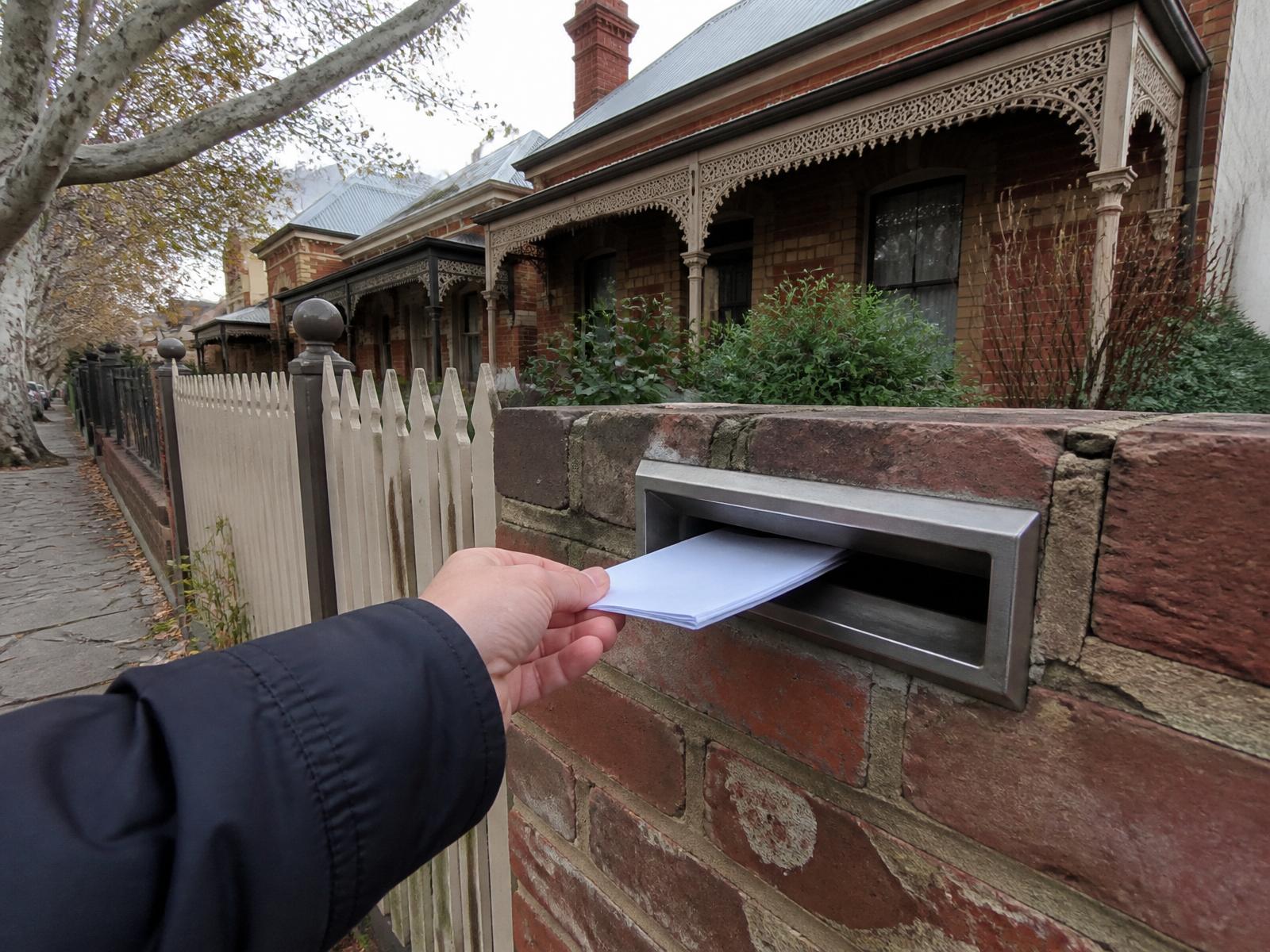
How Leaflet Distribution Melbourne Works for Small Businesses
Not another spec sheet. This is the version aimed at someone who has never booked a leaflet run before and wants to know if it's worth the money, and how to not waste it.
Search "leaflet distribution Melbourne" and you'll mostly find providers describing what they do. Fair enough, that's what a services page is for. This is the other half of the question: whether a leaflet run actually makes sense for a business like yours, how to pick where it lands, and what the GPS tracking everyone mentions actually proves.
Does leaflet distribution actually suit your business?
It's a genuinely good channel for some businesses and a mediocre one for others, and the difference usually isn't the quality of the leaflet. It's whether the format fits what you're selling.
Signs it's a good fit:
- You have a genuine service radius, like a café, a trades business, a clinic, or a local retailer, where someone three suburbs away is never going to become a customer anyway.
- Your offer is easy to act on quickly. A discount code, a call this week, a first visit deal. Leaflets sit on a bench or a fridge for a while, so slow-burn brand awareness plays don't get much benefit from the format specifically.
- You can handle a spike in enquiries without your booking system or phone falling over, since a well timed drop can produce a real bump inside the first two weeks.
Signs it probably isn't, at least not as your main channel:
- You sell online only and have no reason to care which suburb the customer lives in.
- Your offer needs explaining before it makes sense. A single sheet in a letterbox has about three seconds to earn attention, which is fine for a discount and rough for anything that needs context.
- You've already saturated the same handful of suburbs with three other channels this month. Response rates on any channel drop when the audience feels chased.
None of this means skip it if you're a poor fit. It means treat it as a smaller test rather than the centrepiece of your marketing budget, and judge it on a shorter list of suburbs before scaling up.
Picking suburbs, not just picking Melbourne
"Melbourne" isn't a targeting decision, it's a city of roughly five million people across hundreds of suburbs, and the businesses that get a poor result from leafleting are often the ones who booked a broad area instead of the specific streets their actual customers live on.
A rough, workable process: draw a radius around your premises that matches how far a real customer would actually travel (this is smaller than most owners guess, usually under a fifteen minute drive for anything other than a genuine destination business). Then check which suburbs inside that radius you have the weakest existing awareness in, since that's where a leaflet does the most work a customer couldn't have gotten another way. Start there, not with the whole radius at once.
If you're not sure what a specific suburb or postcode will actually cost to cover, our quote builder prices it live rather than making you wait on a quote request, which is worth using even at the planning stage before you've committed to anything.
What actually happens after you book
The short version: you supply or print your artwork, a walker or team of walkers covers your chosen streets carrying a GPS device, and you get a live tracking link during the run followed by a completion report. If you want the full week by week breakdown, timing included, that's covered properly on the how it works page rather than repeated here.
The one thing worth knowing before you book anywhere: the print clock and the distribution clock are two separate things, and a provider who blurs them into one combined promise is usually the one who slips on the delivery date when the print run runs long.
What GPS tracking and photo proof actually tell you
This gets oversold sometimes, so it's worth being precise about what it does and doesn't cover. A GPS trace confirms a person walked the streets on your list. A timestamped photo confirms flyers were physically in hand at that location and time. Together, they solve the specific, historically real problem of leaflet dumping, where a walker binned a bag of flyers to finish a shift early instead of delivering them.
What they don't tell you is whether anyone read the leaflet, or whether the offer landed. That part is on the creative and the offer, not the tracking. Treat GPS proof as confirmation the channel was executed properly, and treat your enquiry numbers over the following two to three weeks as the actual read on whether the campaign worked.
Questions worth asking before you book with anyone
- How do you actually prove the walk happened? Ask for a specific example of a completion report, not just the promise of one.
- What happens to letterboxes marked No Junk Mail? A provider who can't answer this clearly probably isn't checking for it on the ground.
- What's your minimum order and does it match my budget? Below a certain quantity, the per piece cost of routing a walker to a small area stops making sense for most providers, ours included.
- Can I see per suburb pricing before I commit, or do I need to request a quote and wait? A live, editable quote tells you more about how transparent the whole operation is than the pricing itself does.
- If I supply my own printed flyers, does the timeline change? Providers who also print sometimes move printing customers ahead in the queue.
These apply whoever you end up booking with. If you want to see how we answer them specifically, including current coverage, minimums and pricing, that's all on the letterbox distribution page.
Frequently asked questions
Is leaflet distribution still worth it in Melbourne in 2026?+
For genuinely local businesses, generally yes, and the reason is almost boring: a letterbox has none of the competition a phone screen does. It works less well for anything without a real service radius or a clear, fast offer.
How much does leaflet distribution cost in Melbourne?+
Rates typically start from a few cents per letterbox on shared walks at higher volumes and rise from there for solus drops or lower quantities. Full current rates are on our pricing page, and the same numbers show live in the quote builder as you configure a campaign.
How do I know my leaflets were actually delivered and not dumped?+
Ask for GPS tracking and timestamped photo proof as standard, not an add-on. It won't tell you whether anyone read the leaflet, but it does confirm a walker physically covered the streets you paid for, which was historically the easiest part of the process to fake.
Should I target one suburb or several?+
For a first campaign, one or two suburbs you already have some connection to, tested properly, beats spreading a small budget across five suburbs thinly. You learn more from a real result in one area than a diluted one across several.
Test one suburb before you commit to five
Configure a real quote for your chosen suburbs and see the number before you book anything.